
Your students are using AI. Do they know how to use it responsibly?
AI literacy is not one lesson. It grows with them, kindergarten through twelfth grade.
Show me what it looks like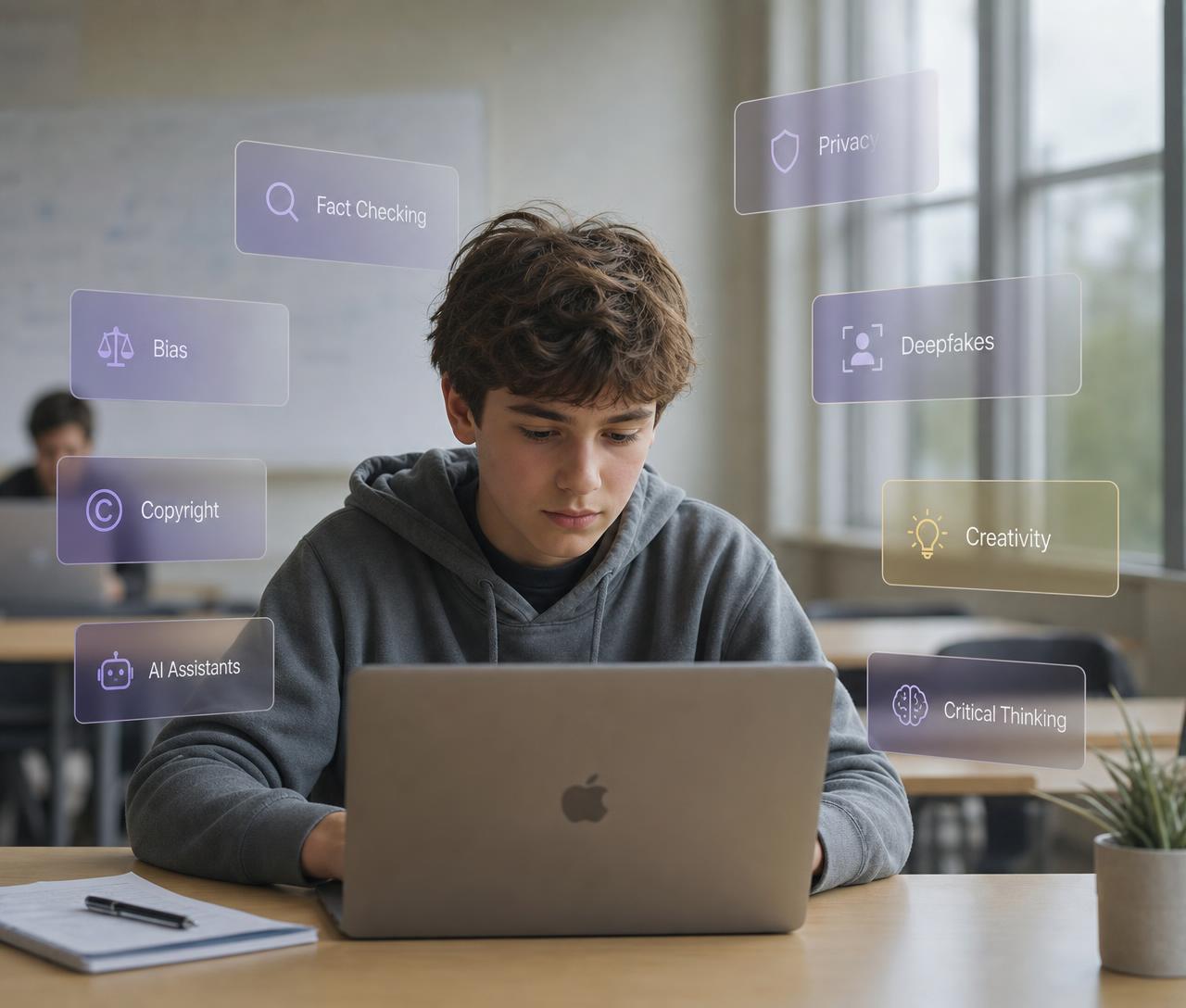
You sit in a student's seat and do one real classroom activity.
Then you see exactly how it is taught. By the end you know where AI literacy is strong in your school, where it is missing, and what to do first.
No prep. No tech. Nothing to set up before you start.
The skill changes at every stage.
It can be taught, at every grade.
Most schools have one answer for every grade.
Usually some version of use it responsibly. It is written into the handbook, said at the faculty meeting, and repeated to a kindergartner and a senior in the same words.
The real skills are different at every stage, and none of them require coding.
This shows you the difference in a few minutes.
Four answers you can act on the same week.
Where it lives, and where it does not
A clear picture of where AI literacy is already happening in your school and where the grades go quiet.
On purpose, or left to chance
Whether what students are learning about AI is planned, or whether it depends on which teacher they happened to get.
Who owns it
The question that decides whether AI literacy becomes a system or stays a side conversation.
A simple starting point
One next step, sized for your role, whether you are a teacher closing your door on Monday or a leader setting direction for the year.

Jamiylah Jones, Ed.D.
Founder and CEO, Creative Transformations
She has spent twenty five years in education across public, private, and international schools.
In that time she has led schools, co founded a K to 12 school in New York City, published a thirteen book K to 12 series on AI literacy, built two AI platforms for schools, produced five hundred videos on AI in education, and speaks nationally and internationally on AI and school leadership.
Used by educators across public, private, and international schools.
Schools are teaching the rules. Far fewer are teaching the thinking. That gap is what this experience makes visible.
It can be taught, at every grade.
Sit in a student's seat for a few minutes and see how.
Show me what it looks like